

Practical Nursing Education
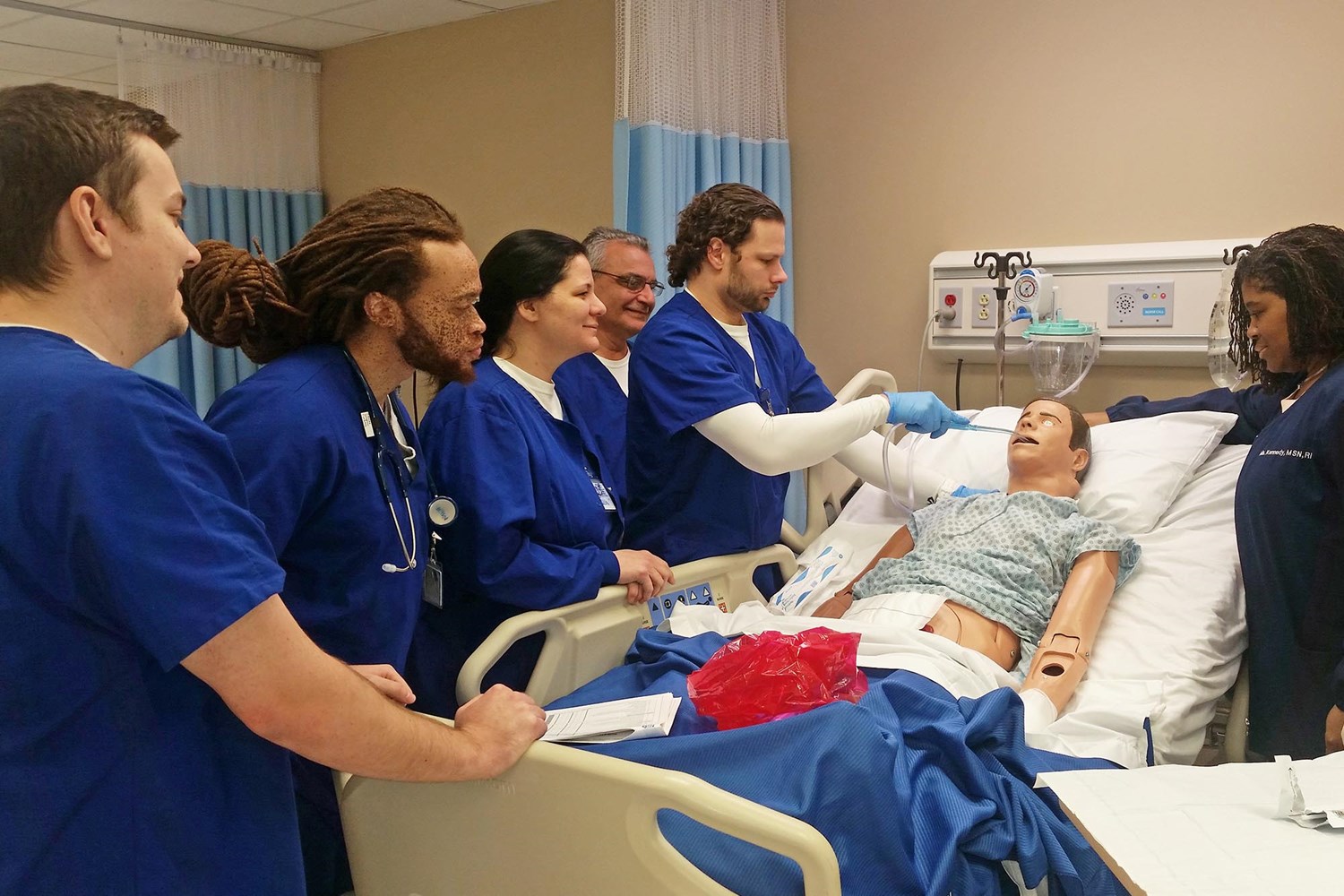
Practical Nurses deliver essential front-line health care, patient education, and support for patients and families. Practical nursing may be appropriate if you like helping people, solving problems, and applying scientific knowledge. The WCCCD nursing faculty instructs students on the theory and skills necessary to assist professional healthcare providers in providing direct patient care.
Practical Nursing Education Program Mission Statement
The mission of the WCCCD Practical Nursing Education Program is to educate, prepare, and empower student practical nurses to become competent practical nurses who exemplify professional practice in a compassionate, caring manner. The program strives for excellence by using best practice standards that promote the health and wellness of individuals, families, groups, and communities in a culturally diverse society.
Effective February 21, 2025, this nursing program is a candidate for initial accreditation by the
Accreditation Commission for Education in Nursing. This candidacy status expires on February 21, 2027.
Accreditation Commission for Education in Nursing (ACEN)
3390 Peachtree Road NE, Suite 1400
Atlanta, GA 30326
(404) 975-5000
https://www.acenursing.org/search-programs?status=Candidate
The curriculum is modeled after the State of Michigan guidelines. Upon completing the program, students can apply to take the NCLEX-PN, the National Council Licensure Examination for Practical Nurses.
A Certificate in the Practical Nursing Education Program from WCCCD prepares you for work as a Licensed Practical and Licensed Vocational Nurse in various settings such as:
- Nursing homes
- Extended care facilities
- Hospitals
- Physicians’ offices
- Private homes
- Schools
- Correctional facilities
Practical Nursing Education Program- Outcomes Table
| Year Data | Cohort Data | |||||
| Year | Number of First Time Test Takers | Total Number Passing on First Attempt | Aggregate First-Time Pass Rate | Job Placement Rate | Aggregate Program Completion Rate - 100% | Aggregate Program Completion Rate - Ultimate |
| 2025 | (Jan-June 2025)=8/8 (July-Dec 2025)=15/15 |
23/23 | 100% | Pending | 32.56% | Pending |
| 2026 | (Jan-June 2026)=7/7 (July-Dec 2026) Pending |
7/7 Half-Year Report |
100% Half-Year Report |
Pending | Pending: December 2026 and August 2027 Graduates | Pending |
Year Data
- NCLEX Data: Reflects graduates who tested during the specified calendar year, regardless of graduation date.
- Job Placement Data: Reflects the total number of Summer and Fall graduates combined for the specified reporting year.
Cohort Data
- Reflects a group of students admitted to the nursing program during the same admission period and tracked through program completion within the established timeframe.
What’s the Job Outlook for Licensed Practical and Licensed Vocational Nurses?
Employment of licensed practical and licensed vocational nurses is projected to grow 3 percent from 2024 to 2034, about as fast as the average for all occupations
Source: https://www.bls.gov/ooh/healthcare/licensed-practical-and-licensed-vocational-nurses.htm (visited May 11, 2026).
Public Notice of Upcoming Accreditation Review Visit by the ACEN
What’s Required to Complete the Practical Nursing Education Certificate Program?
A certificate in the Practical Nursing Education Program from WCCCD requires 40 credits to complete.
As a Practical Nursing Education student at WCCCD, you will take introductory nursing and science courses for your program.
Some students plan to transfer to a four-year college or university after earning their certificate. If that’s your goal, you might choose specific courses. Talk with your advisor about a personalized plan that meets your goals.
What Will I Learn as a Practical Nursing Student?
You’ll learn everything you need to become an LPN/LVN who exemplifies professionalism, compassion, and care. Our program focuses on best-practice standards that promote health and wellness for culturally diverse individuals, families, and communities.
Once you complete the program, you’ll be ready to:
- Provide evidence-based care consistent with the role and scope of practice, and values of the profession of nursing
- Be responsible for implementing scientific evidence to make patient-care decisions
- Provide care to diverse patient populations in diverse health care settings
- Apply knowledge and skills to promote the health and wellness of individuals, families, groups, and communities in a culturally diverse society
End-of-Program Student Learning Outcomes
(Effective for all students graduating August 2026 and December 2026).
Upon successful completion of the WCCCD Practical Nursing Education Program, the graduate will:
- Apply professional accountability congruent with the roles, responsibilities, and values associated within the scope of practical nursing practice.
- Integrate evidence-based principles as a foundation for nursing practice.
- Demonstrate effective patient centered care to diverse populations in a variety of care environments.
- Examine care standards with continuous scrutiny for the betterment of individuals, families, groups, and communities.
(Effective for the Fall 2026 PNE cohort and all students graduating after December 2026).
-
Demonstrate professional accountability in providing safe, ethical, and competent nursing care within the scope of practical nursing practice.
-
Utilize established evidence-based principles when implementing nursing care under the supervision of the registered nurse or healthcare provider.
-
Provide patient-centered care to diverse individuals and families across the lifespan using clinical judgment within the scope of practical nursing practice.
-
Contribute to the improvement of care standards to promote safe and quality patient outcomes through interprofessional collaboration.
The WCCCD Practical Nursing Education Program has full approval from the Michigan Board of Nursing (MBON).
Recommended course sequencing
Prerequisites Total: 7 Credits
- BIO 155 - Introductory Biology 4 Credit(s)
- ENG 119 - English I 3 Credit(s)
Semester 1 Total: 12 Credits
- PNE 110 - Anatomy and Physiology for Practical Nurses 2 Credit(s)
- PNE 101 - Fundamentals of Practical Nursing 4 Credit(s)
- PNE 102 - Physical Assessment for the Practical Nurse 3 Credit(s)
- PNE 104 - Basic Principles of Pharmacology 3 Credit(s)
Semester 2 Total: 8 Credits
- PNE 103 - Beginning Medical/Surgical Nursing 4 Credit(s)
- PNE 105 - Advanced Medical/Surgical Nursing 4 Credit(s)
Semester 3 Total: 13 Credits
- PNE 106 - Basic Principles of Mental Health Nursing 3 Credit(s)
- PNE 107 - Basic Principles of Obstetrical Nursing 3 Credit(s)
- PNE 108 - Basic Principles of Pediatric Nursing 3 Credit(s)
- PNE 111 - Transition in Practical Nursing 4 Credit(s)
Certificate Total: 40 Credits
Note: Certificate total hours may not include prerequisites.
* PNE 110 - Anatomy and Physiology for Practical Nurses - 2 credits, Formerly PNE 100 - 4 credits
** PNE 111 - Transition in Practical Nursing - 4 credits Formerly PNE 109 - 2 credits.
Where is WCCCD’s Practical Nursing Education Program Offered?
The WCCCD’s Practical Nursing Education Program is offered at our Ted Scott Campus. The Ted Scott Campus also offers classes for other medical care-related certificates and degrees. As a WCCCD student, you can take prerequisite courses, use facilities, and get involved at any of our six locations.
It is the policy of WCCCD that no person, based on race, color, religion, national origin, age, sex, height, weight, marital status, disability, or political affiliation or belief, shall be discriminated against, excluded from participation in, denied the benefits of, or otherwise be subjected to discrimination in employment or in any program or activity for which it is responsible or for which it receives financial assistance from the U.S. Department of Education.
More Information
The Practical Nursing Education Program may admit up to 24 students twice a year, in the spring and fall semesters. Please see below for the Application Submission Dates:
Fall Semester - May 15 Spring Semester - September 15
Prospective students are required to submit the following:
- Completed WCCCD Health Science Programs Application
- High School Diploma, G.E.D., or have an official copy of your High School Transcript showing date of completion.
- Official Transcripts (including transcript from WCCCD) validating completion of the required prerequisite courses.
- Copy of your HESI A2 Entrance Exam Results (minimum score of 75% in both Math and Reading Comprehension to meet admission requirements; also complete the Critical Thinking and Learning Styles sections on the exam).
- Two (2) Reference Letters- Typed; no copies, originals only, signed in ink within 60 days of the application deadline. Letters written by family and WCCCD faculty or staff are not accepted. If unemployed, submit two personal references.
- Submit a typed, double-spaced, 1” margins, 500 to 1000-word essay describing “How I plan to be successful in completing the Practical Nursing Program.” Include a title page. The essay must be signed and dated.
- Submit a copy of the PNE Information Session Attendance Verification Form (obtained from the Nursing Department). Valid for one year from the date of attendance.
- Fulfill all of WCCCD admission requirements.
PLEASE NOTE: WCCCD Practical Nursing Education Program does not accept the College Level Examination Program (CLEP) to fulfill any program requirements.
Wayne County Community College District is accredited by the Higher Learning Commission of the North Central Association of Colleges and Schools.
230 South LaSalle Street, Suite 7-500
Chicago, IL 60604
800-621-7440
Website: www.ncahlc.org
Information regarding the status of an institution is available at ext. 11, or by email at status@ncahlc.org; complaints can be directed to ext. 198, or by email at complaints@ncahlc.org.
Click here for Michigan Board of Nursing Approved Education Programs
The Ted Scott Advanced Simulation Laboratory provides world-class healthcare simulation experiences for students. Hands-on simulation helps students develop preparedness and insight that are best learned and practiced in realistic clinical conditions. This translates into improved real-world communication, collaboration, teamwork, critical thinking, clinical judgment, and crisis management. The Simulation Lab is equipped with an array of mid-to high fidelity patient simulators, including adult, pediatric, and obstetric manikins that can mimic a wide range of physiological conditions to support student learning. These immersive experiences are designed to bridge the gap between theory and clinical practice while supporting achievement of the End-of-Program Student Learning Outcomes (EPSLOs).
Phone:
734-699-7008